Showing posts with label naturalization. Show all posts

Thursday, August 13, 2015

Ted Cruz Still Isn't Eligible to Be President ... Or Is He?

The Eligibility Clause of Article II states:
No Person except a natural born Citizen, or a Citizen of the United States, at the time of the Adoption of this Constitution, shall be eligible to the Office of President; neither shall any person be eligible to that Office who shall not have attained to the Age of thirty five Years, and been fourteen Years a Resident within the United States.
Going back two years, I expressed the view that Ted Cruz is ineligible to be elected President of the United States. In the interim, I have written a few additional posts, including one responding to two former Solicitors General of the United States. Their joint blog post on Harvard Law Review's blog put them in the "Ted's eligible" column. I've gathered my posts in a convenient page for your reference.

For me, Cruz's nettlesome thicket is found in that first phrase, "No person except a natural born citizen[.]" Cruz was born to an American mother and Cuban expatriate father. His married parents lived in Canada at the time of his birth. In fact, Cruz held dual Canadian and US citizenship until 2014 when he surrendered his Canadian citizenship.


Now, to get into the nettles of his thicket.

Cruz, under Canadian law, was a natural born citizen of Canada at birth. But, because US law at the time of his birth so provided, he also acquired US citizenship at birth.


Now, the question that troubles me, the obstacle I see standing between Cruz and the Presidency, is whether that citizenship he acquired at birth meets the requirement that he must be a "natural born Citizen." You see, he either acquired that status because he had a natural right to it, or because his mother had a natural right to confer that status on him, or because the nation had a natural right to confer it on him. I have concluded, based on his birth outside the United States, that he is not a "natural born citizen."

I have not changed my conclusion. I am, however, giving the possibility that he is eligible one last probing. Let me explain a dilemma, and ask your assistance.

Allow me to back into the discussion this way:  I am a citizen of the United States. I know that I am. But, how do I know it? 
I am a lawyer by trade, and like most lawyers, I tend to examine things through the lens of the law. In this instance, I examine the question of my citizenship through that same lens, and conclude that I am a citizen. In this case, the lens of the law is tinted with statutory, constitutional, and historical tints.


If only everyone could agree with the easy simplicity of constitutional text.
The Fourteenth Amendment to the Constitution says that I am a citizen. 

It says, all persons (I'm one of the those), born or naturalized in the United States (I was born there), and subject to the jurisdiction thereof (since I am not part of a foreign diplomatic corps here on service to that nation, and since I am not part of an enrolled Indian tribe, I am subject to its jurisdiction) are citizens of the United States and the State in which they reside.

A federal statute also says that I am a citizen. 


Title 8 USC 1401 provides several categories of persons who are "nationals and citizens of the United States at birth[,]" including "person[s] born in the United States, and subject to the jurisdiction thereof[.]" As I mentioned above, I am one of those folks, so I am a citizen of the USA by operation of 8 USC 1401. 

But, suppose that Congress had never enacted that federal statute, 8 USC 1401. Would I be a citizen of the USA? Yes, in fact, the separate operation of the Fourteenth Amendment makes me a citizen, whether the Congress adopted a law saying so or not. 

Our common law tradition says that I am a citizen.

Well, then, suppose that the statute had not been enacted and the Fourteenth Amendment had not been ratified and made part of the Constitution. Would I be a citizen of the USA? Again, yes, I would still be a citizen of the United States. As my prior posts indicate, the States that make up the Union -- Louisiana excepted -- adopted the common law of England when they were admitted to the Union (or in the case of the original thirteen colonies, when they created it). Under English common law, a person born on English soil was a subject of the Crown (unless their parents were present in England on diplomatic service from another nation). 

Translated to America, this concept of jus soli meant that, born on the soil of the Commonwealth of Virginia, one was a Virginia citizen. So, even in the absence of any provision of the Constitution or statute, I would be a citizen of whatever State in which I was born (New Mexico, by the way). Prior to ratification of the Fourteenth Amendment, State citizenship in any State of the Union equated with citizenship of the United States.

In that period, prior to the Fourteenth Amendment and after the ratification of the Constitution, Congress had a constitutionally-derived power to "naturalize" citizens. Naturalization means to make one a citizen who was not born one. The States granted that power to the Congress in Article I, section 8 of the Constitution. When Congress first exercised that power, in the naturalization act of 1790, it adopted a provision of the law that made certain children born to American parents abroad "natural born citizens." Five years later, Congress repealed that law and crafted a new Naturalization Act, but did not again employ the phrasing "natural born citizen" to characterize the citizenship status of children entitled to be citizens despite their birth abroad. 


So, then, Congress took one foray into the field of granting "natural born citizen" status via statute, and has never done so since then. That does not necessarily answer the question of eligibility because it does not necessarily answer the question of whether there is a difference between a "natural born citizen" and "citizen at birth" (which is the statutory phrasing from the Immigration and Nationality Act).

The Constitution would resolve this lingering doubt of mine if, but only if, it stated a governing principle in an indisputable manner. I happen to think that it does so when it states the requirement of being a "natural born citizen" for purposes of presidential eligibility. To my mind, that leaves anything other than citizenship consequent to birth on our soil as different from "natural born citizenship." The problem, however, is that all manner of folk, including other legal "experts," treat the principal citizenship statute (8 USC 1401) as conferring "natural born citizenship" on those children born abroad who are treated in the statute as being "citizens at birth."

If we go back to our lineal legal ascendants, the English, their Parliament asserted and exercised a power regarding naturalization of persons born abroad as English subjects. Remember, English law on creation of the subject-Crown relationship required only that a person was born on English soil (except when parents were present in English under legal privilege by, for example, service as emissaries of a foreign power). Yet, before we pulled ourselves up from the English garden and replanted ourselves as the united States of America, Parliament had asserted and exercise a power to grant to certain persons born abroad from English the status of natural born subjects.

So then, the question might be answered by assuming that the power asserted by the Parliament to make natural born subjects of persons that, prior to Acts of Parliament, would only ever be denizens of the Crown was a power natural to, attendant to, the legislative function. If that were the case, then when we stood legislatures up in the united States of America, there would be no reason to suppose that the same power exercised by Parliament -- making natural born subject out of foreign born denizens -- could not be exercised by the State legislatures. Of course, that still does not answer whether a like power would be found in the grant of legislative authority to the Congress by the States in the Constitution.

Remember, Article I provides only that Congress shall have power to make a uniform rule for naturalization. It does not provide by express terms a power to make anyone a natural born citizen, nor a power to define the precise terms of the Constitution. But we could assume -- and based on "scholarly" blog posts it appears that many do -- that the States had the power to do so as independent sovereign States. We could then further assume -- as those scholarly blog posts do -- that the States concluded that they should grant to the Congress that power and that they did so by the otherwise seemingly unambiguous "Naturalization Clause."


The Governator Question: If Congress Can Make Persons Born Outside the United States "Natural Born Citizens," What Would Prevent Congress from Making Governor Schwarzenegger One?


For those who are willing to take each of these assumptive steps (leaps, in my judgment), there really is a further problem that they must own up to as a consequence of their approach to the construction of this constitutional provision. If the Congress garnered from the States via the "Uniform Rule of Naturalization" Clause a power to grant "natural born citizen" status to certain persons born abroad, what limiting factor prevents Congress from expanding the categorical definitions from time to time, as need, or whim, direct? I refer to this as the Governator Question.

Suppose that a Republican majority in the House and the Senate passed a law tomorrow adding a new section to the Immigration and Nationality Act. That provision, the Governator Clause, would permit any person that has acquired citizenship by naturalization, that has continuously resided in the United States for twenty years or more, and that has been elected to a State wide office at least once, to be treated, for purposes of law, as a "Natural Born Citizen." The effect of such a law would be to make Arnold Schwarzenegger eligible to be elected President.


Perhaps that really is what our Constitution has done. Perhaps the delegates to the Constitutional Convention of 1787 actually crafted the "Uniform Rule of Naturalization" Clause with all these sequelae and consequences in mind. Perhaps the States in convention to ratify the new Constitution really contemplated the surrender of these affects of sovereignty to the federal government.

If those who can show these discussions took place would kindly do so, I could wholeheartedly support Ted Cruz. 
If those who can show that the Convention, and the State ratifying conventions, conducted such votes would kindly do so, I could wholeheartedly support Ted Cruz. If those who can show that the participants in these conventions held these intentions would kindly do so, I could wholeheartedly support Ted Cruz.

I await proffers of such evidence as might be forthcoming.

Friday, July 24, 2015

A Satchel of Embarrassments: Stephen Field and Ping v. United States


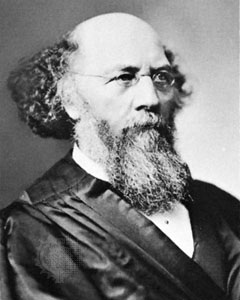
Stephen Field
If you haven't noticed it by now, my list consists of Justices and opinions that have wandered from the Constitution's text, have expanded that text from the meaning of its actual words, or have imported entirely new meaning into text. Justice Stephen Field, a brilliant jurist, committed his constitutional foul ball in a case that recognized, for the first time, a power of the Congress to control immigration as part of the sovereignty of the United States federal government:
"The power of exclusion of foreigners being an incident of sovereignty belonging to the government of the United States as a part of those sovereign powers delegated by the constitution, the right to its exercise at any time when, in the judgment of the government, the interests of the country require it, cannot be granted away or restrained on behalf of any one."
What Justice Field omitted from his opinion was an actual provision of the Constitution granting Congress such power to exclude foreigners.

Now, you may be thinking, but the Constitution grants to Congress power over immigration. Well, not exactly. What the Constitution says is quite precise. The Constitution grants to Congress power to "establish an uniform Rule of Naturalization." Oddly, though it might seem otherwise, that provision alone, no other, states the nature of the power delegated by the States to the Congress with respect to such matters. There is no "Immigration Clause" in the Constitution, no express delegation of the power to restrain or encourage immigration to the United States anywhere in the Constitution. All there is is the Naturalization Clause, and nothing more.

The Naturalization Clause, for what it's worth, actually has to do with the decision by the States to grant to Congress the exclusive power to define how individuals could become citizens of the United States. Yet, in this case, using the florid and imprecise style of language common to many of these bad decisions, Justice Field presumptively includes the power to exclude foreigners within the general powers of the Congress. And, yes, the prose is florid:
The control of local matters being left to local authorities, and national matters being intrusted to the government of the Union, the problem of free institutions existing over a widely extended country, having different climates and varied interests, has been happily solved. For local interests the several states of the Union exist, but for national purposes, embracing our relations with foreign nations, we are but one people, one nation, one power. To preserve its independence, and give security against foreign aggression and encroachment, is the highest duty of every nation, and to attain these ends nearly all other considerations are to be subordinated. It matters not in what form such aggression and encroachment come, whether from the foreign nation acting in its national character, or from vast hordes of its people crowding in upon us. The government, possessing the powers which are to be exercised for protection and security, is clothed with authority to determine the occasion on which the powers shall be called forth; and its determinations, so far as the subjects affected are concerned, are necessarily conclusive upon all its departments and officers. 
Sadly omitted from Justice Field's decision is constitutional writ, constitutional text, or arguments from them. His argument, instead, is a kind of organic demand of the nation at large. It says, in essence, "only the federal government can address" this question because of the expanse of the Nation and the variations of its interests. 

Which Clause of the Constitution, you may ask yourself, is the one on which Fields' conclusions rest? The answer, unfortunately, can only be the Fields Clause. Because his decision repudiates the historic role played by the States in regulating migration into their borders by foreigners, and recognizes a sole power in the federal government to so regulate, I have added Justice Field's head to the Bag of Shame.

Tuesday, April 7, 2015

US Citizenship: Membership Has Its Privileges


If you’re old enough, you remember the slogan, heavily promoted, for the American Express Card.  The long running campaign suggested that more was gotten by having the American Express Card than just a means of conducting cashless transactions. Even today, the campaign, officially retired in 1996 after a nine-year run, echoes in the company’s continued promotion of a broad array of services that constitute the “privileges” of being an American Express cardholder.

As citizens of the United States, we have a sense that we are “privileged.” Certainly, comparing the standard of living here with that in many other nations confirms that the average American is, in fact, very privileged. Still, many of us have friends, acquaintances, work associates, even relatives, who share in that higher standard of living, but who are not US citizens.

So, here is a question to consider:  if the United States decided to conduct a campaign to add additional citizens – not merely guests, permanent resident aliens, or undocumented persons – and it adopted as an adman’s pitch, “Citizenship has its privileges,” what would those privileges be?

Obviously, privileges of citizenship cannot simply be the same benefits that flow to anyone present within the territorial boundaries of the country. If it were, why bother to provide a system of naturalization that adds 700,000 naturalized citizens to our body politic each year? In the law, you are a citizen, or you are an alien. We work alongside, play alongside, recreate, shop and walk alongside aliens everyday. Yet, in the main, nearly one million aliens amongst us each year seek and get the “golden ticket” of citizenship. Also of note, a comparatively tiny number of citizens are rushing for the exit and renouncing our primal claims of citizenship.

So, then, what are the privileges of citizenship?

As it turns out, the answer depends on who provides it.

For example, the federal government lists these “benefits” of citizenship: bringing family members to the United States; the right to vote; the right to protection by the government when abroad, including when victimized by crime or endangered by disasters or emergencies; access to a larger pool of employment opportunities, as many federal jobs are conditioned on citizenship; the right to participate in a federal jury; and, a larger pool of federal student aid.

More specifically, if you ask the folks whose business it is to process applications for citizenship, the US Citizenship and Immigration Services, they supplement the above list with these additional “rights:” freedom of expression; freedom of worship; the right to a prompt, fair trial; the right to run for elective office; and, freedom to pursue “life, liberty and the pursuit of happiness.”

Attorneys in private practice note additional benefits of citizenship. If a naturalized citizen commits a crime and a permanent resident alien commits the same crime, unless the crime was one of fraud in applying for citizenship (think John Demjanjuk), the naturalized citizen cannot be deported to her home country. Her twin sister, the permanent resident alien, can be deported. Also, as lawyers will explain, the federal tax code exempts certain property transfers from a deceased spouse to a surviving one, but only if the spouse is a citizen.

Still, the foregoing benefits and privileges cannot fully answer the question.

Reading immigrants’ stories helps.

Opportunity. Freedom. A future with a future in it. Expressing appreciation for the sacrifices made by this Nation, particularly its military sons and daughters.

We tend to take these things for granted. The vast majority of Americans are not in reduced poverty, living, literally, moment by moment in fear of harms, whether from criminals, tyrants, famine, or otherwise. Nor have we lived all our lives – from cradle to grave – in a society that requires or prizes severe regimentation. We choose where we live. We choose what we study. We choose whether to pursue professions or to undertake trades. We even choose burial or cremation at the end of our days.

Some immigrants, particularly coming from lands of limited opportunity, note that America has been one place where everyone has the opportunity to be great, to stand apart from the crowd, to distinguish ourselves.

Just as Soviet-style regimentation is unfamiliar here in the US, many others come to America fleeing oppressions of one kind or another. For some, that oppression affects the most natural of human instincts: to propagate the species. The 1993 grounding of the Chinese merchant ship Golden Venture, followed thereafter by numerous asylum applications by Chinese nationals, brought new light to the brutality of China’s coercive one-child policy, enforced with nonconsensual abortions and sterilizations. Other repressive regimes have driving immigrants to America’s shores, including Myanmar, Communist Vietnam and Cuba.

I suppose that one privilege – to me – stands above all the others that might be named. That one is the power to cast a vote, and by that vote to help shape the future in which we will live, in which our children will live, and in which new Americans will be made welcome.

The next quadrennial presidential election season approaches. Already two would be nominees have announced their pursuit of the Republican nomination. As the race comes into full swing, the clamor and din, the clashing of issues and personalities, will not fade, but rise to its expected Kabuki crescendo. Strong opinions sharply stated will, at least for a time, offer voters, seasoned ones and virginal voters, seemingly irreconcilable conflicts among candidates and parties.

Now is as good a time as any to place firmly in our minds the sage and humble supplication of Abraham Lincoln, offered in his First Inaugural Address. Recall that Lincoln’s election, for those that feared an indomitable federal government would overwhelm that natural right framed in the Declaration, to throw off a government repressive of liberty, was a clarion. Such was the reaction that Lincoln, essentially, snuck into the Nation’s Capitol. While he avoided an assassin’s bullet that day, the danger of violent dissent never dissipated. Still, in speaking to the yet united States, he appealed to calm, to reason, to Christian sentiment, in voice no less needed now as then:


As the election approaches, I suspect some will find offense in my commentaries about various candidates and various issues. I hope you will find in me this same aspiration and invitation as offered by Lincoln:  “We must not be enemies. Though passion may have strained it must not break our bonds of affection.”

Monday, July 7, 2014

DREAM Act Birds Come Home to Roost

This post is not on the question of whether America is better off or worse for its sieve-like southern border.  It's not about whether all persons not lawfully in the US should be rounded up and deported. It is about the dangerous condition in which our Republican House of Representatives has left the Nation by ignoring President Obama's decision to usurp the exclusive power of the Congress to provide a uniform law of naturalization.

Obama's imposition of the provisions of the DREAM Act -- by executive order because Congress did not approve it -- should have resulted in impeachment. Instead, Congress sits idly by, leaving the States to the various depredations that will follow.  This blog post is about one of those depredations:  a decision by the US Court of Appeals for the Ninth Circuit holding that Arizona is likely violating the equal protection rights of individuals who have obtained deferred action under Obama's unconstitutional Executive Order.

In an appeal from a trial court's decision refusing to interfere in Arizona's enforcement of its motor vehicle licensing laws, the US Court of Appeals for the 9th Circuit has concluded that Governor Jan Brewer and the State of Arizona are likely violating the equal protection rights of individuals granted deferred action status under Obama's executive adoption (i.e., unconstitutional adoption) of the DREAM Act.

The equal protection violation results from the State's decision, based on the Governor's Executive Order, not to issue motor vehicle operator's permits to individuals whose proof of legal status in the US is based on the documents evidencing the federal government's grant of deferred action.  The State of Arizona does grant motor vehicle operator's licenses to individuals whose proof of legal status consists of documents showing the grant of deferred status under other (congressionally adopted) (constitutional) deferred action programs.

Set aside the question of what to do about unregulated migration into the United States.  Set aside the dispute over so-called anchor babies.  Set aside the question of whether the States should all kowtow to federal standards for their issuance of motor vehicle operator's permits (a peculiarly State function).

Here we have a President that has decided to act like Congress has passed a law that it hasn't.  There is no law on the book adopting the proposed terms of the DREAM Act.  If Congress chose to enact the DREAM Act, the Constitution's terms make Congress's judgment about naturalization beyond the purview of the President.  Congress hasn't enacted the DREAM Act.

Instead, Obama, whose behavior as unitary Executive/Legislative/Judiciary of the United States, has simply issued an executive order directing that ICE and DHS act as though Congress had enacted the DREAM Act.

From that unconstitutional act, we proceed to the preposterous decision of the 9th Circuit.  Arizona refuses to pretend that Obama's Executive Order has the force and effect of federal law.  So it concludes for itself that the use of documents proving deferred action under the unadopted DREAM Act does not satisfy Arizona's standards for proof of lawful presence in the United States.  On  this determination, the 9th Circuit bases its conclusion that Arizona likely violates the Equal Protection rights of those residing in Arizona that have obtained deferred action status from this Administration.

Did you follow all that?

Summed up:  Obama imposed an executive order (unconstitutionally) in an area of federal law and policy that belongs exclusively to Congress (naturalization).  Arizona, which, like each State, has the public health and safety justification to impose licensing requirements and does so, has established a standard for proving lawful presence in the US that does NOT accept the exercise in unconstitutional power undertaken by Obama.  The 9th Circuit then concludes, not that Obama is acting illegally and Arizona is not bound by his unconstitutional actions, but that Arizona is likely violating the rights of those whose legal presence in the United States has not been obtained by Act of Congress.

We are three days past Independence Day.  I hope, nonetheless, that you will recognize that usurpation of legislative authority by King George III constituted the principal basis for our rebellion against English tyranny.  Obama's tyranny is no less offensive to the republican self-government to which our Declaration aims, our State Constitutions frame, and our National Constitution commits.

Saturday, September 28, 2013

But What If Ted Can't Be President?

Imagine the scene:

Candidates for the nomination of the Republocratic Party to the office of President of the United States are gathered for a debate. Standing at lecterns, from left to right, are five candidates for the nomination. They are:
White Tail, a Native American, born on a Native American reservation, in the United States to parents that were, as well, and have always been, registeredmembers of their federally recognized tribes and citizens of the United States.
Freddie Fox, born in the United States to Canadian parents, both of whom were born in Canada, claim Canadian citizenship, travel on Canadian passports, but who work in Hollywood.
Bethany Depp, born in France to married parents then living in France but who were born in the United States to parents also born in the United States and that have always been citizens of the United States.
Odala Olama, born in Kenya to an unmarried mother visiting Kenya from her native United States, of which she claims to be a citizen since birth not yet 21 years of age, and to his father, a native born citizen of Kenya. 
Omama Osama, born in the United States to an unmarried mother, a native born citizen of the United States, not yet 21 years of age, and his father, a native born citizen of Kenya.
After eight years of ongoing “birther” controversy, a blogger participating as a questioner in the Republicratic debate asks each candidate to address the following question and its parts:

"Article II of the Constitution organizes the executive powers of the federal government and deposits them entirely within a President of the United States.  That Article also sets the qualifications for the President.  There are not many:  The president must be 35 years of age, must have been fourteen years a resident of the United States, and must be a 'natural born citizen' of the United States.  On what basis do you claim to the meet the qualification that the President must be a natural born citizen of the United States?  What provision of the Constitution makes you a natural born citizen of the United States?  Do you depend upon the operation of a federal statute to claim status as a natural born citizen of the United States?  If you do depend upon the operation of a federal statute to assert natural born citizenship, to what statute do you refer, and on what power of Congress do you contend the enactment of such a statute relies?"

Perhaps we should just ignore the inconvenient portions of the Constitution.  In fact, arguments are made, from the left and the right of the political spectrum, that there already is a whole lot of ignoring the Constitution going on.  We are, however, a constitutional republic. Thus, we aught not simply ignore the provisions of the Constitution that we find disagreeable. The Constitution provides for its own amendment in Article V.  A straightforward reading of Article V omits any process whereby the Constitution is amended by being ignored or reinterpreted.

To the present unpleasantness:

I have concluded that Senator Ted Cruz of Texas is ineligible to serve as President of the United States.  While this statement will result in castigation by others who, like me, love the stand he took in the Senate on defunding Obamacare, I take it because it reflects my honest conclusion regarding the text and meaning of the Constitution.

I could not support his selection as the 2016 nominee of the Republican Party for the Presidency.  I may get smacked around for saying so, but the Constitution limits eligibility for the office of the President to those who are "a natural born citizen" (or who are old enough to have been "citizen of the United States, at the time of the adoption of this Constitution"). US Const. Art. II, sec. 1, cl. 5.

The Constitution does confer a power on the Congress regarding naturalization. Article I, sec. 8, cl. 4 states that Congress has the power "To establish a uniform rule of naturalization." The Constitution does not state that Congress has the power to define what is a "natural born citizen." Nor does the Constitution say that the Congress has the power to determine that individuals born outside the United States are "natural born citizens."

Some have argued that the naturalization power granted to Congress necessarily encompasses the power to grant “natural born citizen” status to persons that would not, by circumstances of their birth, be considered natural born citizens. Those who take that position err. They do so by relying the fact that the English parliament exercised power to grant “natural born subject” status to person that, but for such a statutory enactment, would not have been “natural born subjects” because they were not within the English Common Law definition of such. Unlike the legislative powers exercised in a parliamentary government, however, the Congress of the United States is a legislative body of limited, express powers only. For those, such as Paul Clement and Neal Katyal, that conclude that “natural born citizens” includes persons granted that status by virtue of congressionally enacted Naturalization Acts, their conclusion rests on concluding that Congress was given the power not only to naturalize citizens who were aliens, but to further endow “natural born citizen” status on persons who circumstance of birth did not cause them to fall within the common law definition of “natural born citizen.”

Prior to the ratification of the Fourteenth Amendment, there was no constitutional clause defining citizenship of the United States or how citizenship is acquired. It is only with the Fourteenth Amendment that we have a constitutional provision defining citizenship: "All persons born or naturalized in the United States, and subject to the jurisdiction thereof, are citizens of the United States and of the state wherein they reside." That clause, however, does not expressly or directly assert that its provision defines the Article II phrase, “Natural Born Citizen.”

The Naturalization Clause cannot properly be the source of a power in Congress to enact laws extending "natural born citizenship" to persons born outside the United States. As the Supreme Court interprets "naturalization," for example in Boyd v. Nebraska ex rel. Thayer, 143 U.S. 135, 162 (1892), it is "the act of adopting a foreigner, and clothing him with the privileges of a native citizen." Thus, the Naturalization Power is the power to confer a status similar to, but not the same as, "natural born citizenship."

I am not certain how any of my fictional candidates would respond to the questions posed.  Remember those questions: 

[1] On what basis do you claim to the meet the qualification that the President must be a natural born citizen of the United States?  

[2] What provision of the Constitution makes you a natural born citizen of the United States?  

[3] Do you depend upon the operation of a federal statute to claim status as a natural born citizen of the United States?  

[4] If you do depend upon the operation of a federal statute to assert natural born citizenship, to what statute do you refer, and on what power of Congress do you contend the enactment of such a statute relies?"

Were I Ted Cruz, standing at such a lectern, I think my answer would have to be, "My mother is a native born citizen of the United States, therefore I am."  In fact, he said nearly precisely those words in an interview with ABC:  “My mother was born in Wilmington, Delaware. She’s a U.S. citizen, so I’m a U.S. citizen by birth. I’m not going to engage in a legal debate.”  But given his unwillingness to engage in "legal debate" on the question, we may never know what provision of the Constitution he believes makes him a US Citizen.  He has eschewed reliance on the Fourteenth Amendment's Citizenship Clause.  Since the Constitution omits a provision granting "natural born citizenship" status to persons born abroad to American citizens, he most likely would look to federal statutes by which Congress has, justifiably or not, sought to extend natural born citizenship in special circumstances to those born outside the United States.  And here is Ted’s "got ya" moment.

The Constitution DOES NOT CONFER, by its EXPRESS TERMS, a power on Congress to endow any person with status as a "Natural Born Citizen" of the United States. Remember, Congress is not Parliament. Instead, as explained above, the Naturalization Clause grants to Congress the power to provide a uniform rule for naturalization.  Again, in turn, naturalization makes one that is not a citizen into a citizen, by operation of law, not by fact of birth.

I would prefer to be wrong in this conclusion. I am willing to be convinced otherwise by such arguments as rest on the Constitution and sound principles of its construction and interpretation. Those offered thus fair fail to carry weight. Indeed, more often, what is suggested to be noteworthy about such conclusions is who has drawn the conclusion rather than the reliability, historicity or constitutionality of them. Absent a reasoned explanation that dissuades me from my understanding based on history and the law, I cannot support Ted Cruz in his pursuit of the Republican nomination.